Central Vietnam
Hoi An
Introduction
Hoi An Ancient Town is a UNESCO World Heritage site where Japanese, Chinese, and Vietnamese architectural traditions intersect — best understood slowly, on foot, across multiple visits.
Quick facts
Ancient Town ticket required for core heritage area. Famous for tailoring, lanterns, and monthly full-moon festivals. Near Da Nang and My Son Sanctuary.
Interactive map
Detailed maps and location references are being added to each destination guide.
Historical background
A major Southeast Asian trading port from the 15th to 19th centuries. Merchant houses, assembly halls, and the Japanese Covered Bridge tell the story of international exchange before modern tourism.
Cultural significance
Tailoring traditions, lantern-making, and cao lầu noodles are living cultural practices — not museum exhibits. Evening atmosphere transforms the town; daytime reveals craft and commerce.
Founder experience
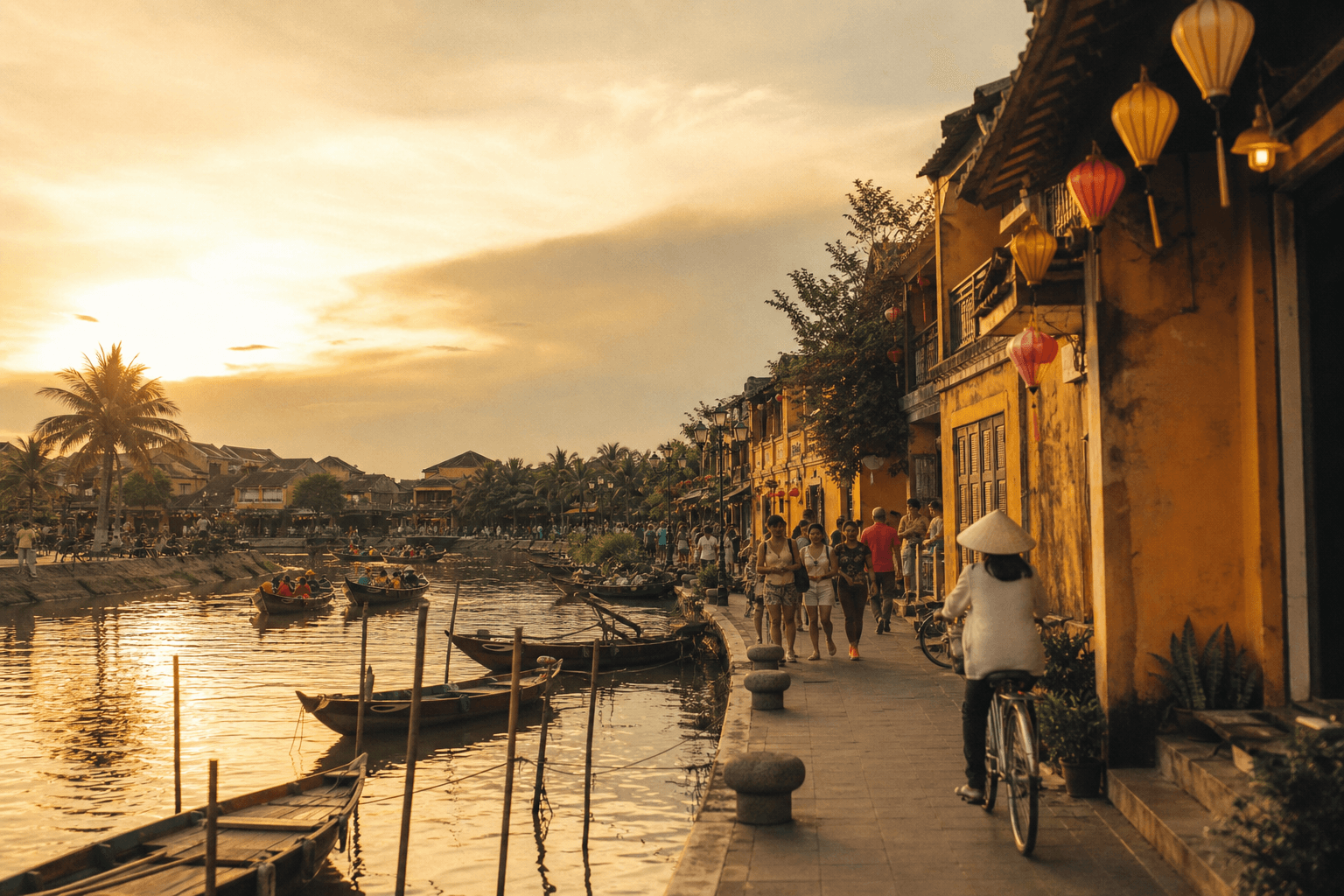
Walking the old town at dusk, when lanterns illuminate ochre walls, connects you to centuries of traders and craftspeople who made this port a crossroads of cultures.
Photography gallery
Original photography from Hoi An. Captions explain cultural and historical significance — not merely describe beauty.
Travel planning
Two to three days minimum. Combine with Da Nang beaches and Hue imperial sites. Avoid rushing through in a single afternoon.
Additional learning resources
Central Vietnam cuisine, áo dài traditions, Vietnamese festival calendar.