Clothing & Identity
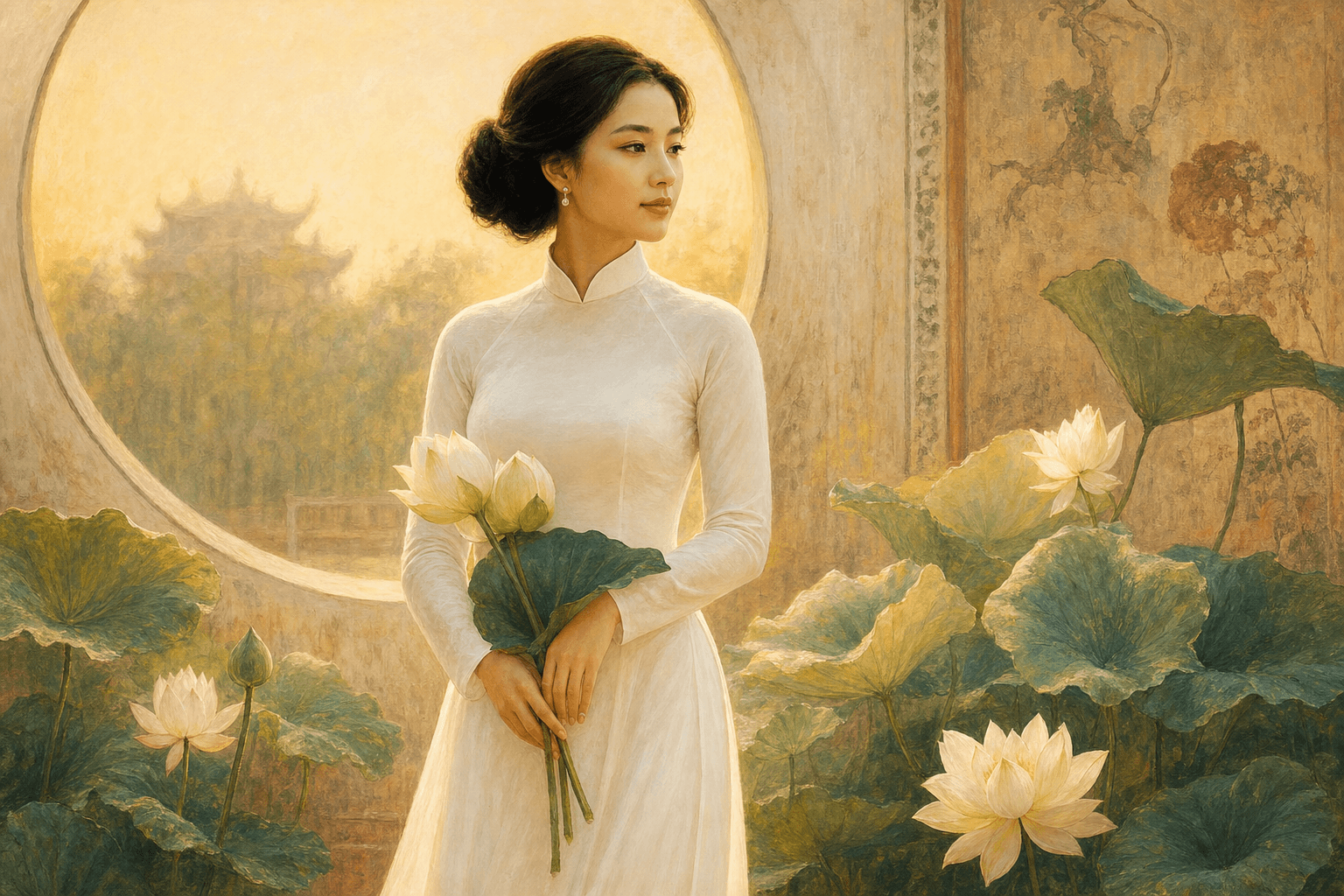
The Áo Dài
Based on research
Introduction
The áo dài is Vietnam's most recognized traditional garment — worn at weddings, Tết, graduations, and formal occasions. Its evolution reflects Vietnam's history of cultural adaptation and pride.
Historical background
The modern áo dài emerged in the early 20th century from earlier five-panel gowns. French colonial influence and Vietnamese modernization both shaped its contemporary form.
Cultural context
Regional variations exist in color, fabric, and styling. The garment symbolizes elegance and cultural identity. It appears in art, photography, and ceremony throughout Vietnam.
Current experience
Tailors in Hoi An and Ho Chi Minh City create custom áo dài. Visitors may commission one respectfully — understanding it is cultural dress, not costume.
Practical visitor information
Allow several days for tailoring in Hoi An. Research fabric quality. Wear appropriately at sacred sites.
Additional resources
Traditional Vietnamese Wedding, Tết — Lunar New Year.