Family & Customs
Traditional Vietnamese Wedding Customs
Experience and research
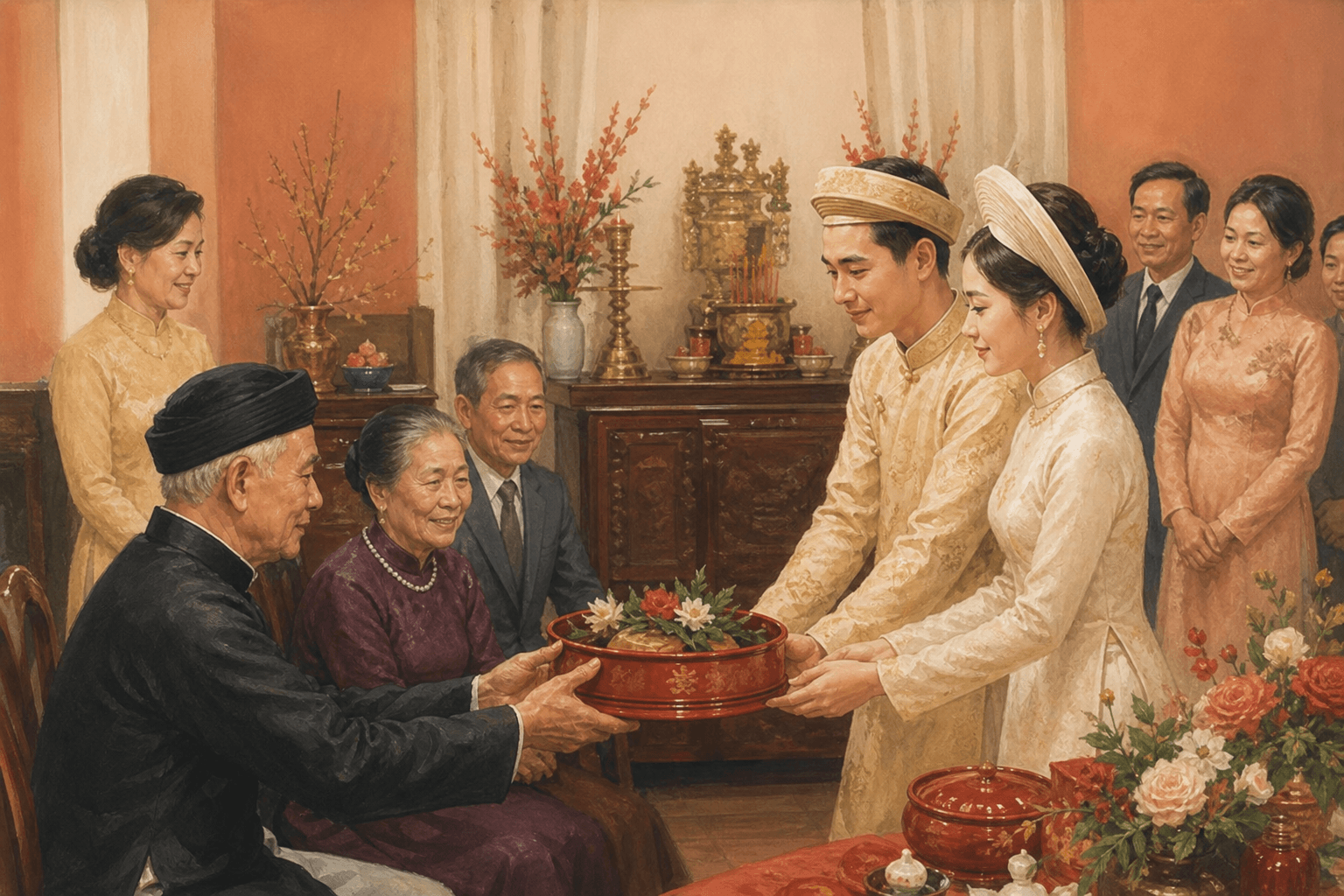
Introduction
The Traditional Vietnamese wedding is among the most significant family ceremonies in Vietnamese culture. Understanding its layers — preparation rituals, ceremony structure, clothing symbolism, and family roles — helps visitors appreciate what they may witness as guests or observers.
Historical background
Wedding customs vary by region and family tradition, but core elements — ancestor veneration, family approval, and symbolic exchanges — reflect Confucian and Buddhist influences woven into Vietnamese family life over centuries.
Cultural context
Marriage is understood as joining two families, not only two individuals. Ceremonies often span multiple days. Red and gold symbolize prosperity and joy. The áo dài features prominently.
Current experience
Modern weddings may blend Western and traditional elements. Urban and rural celebrations differ. As a visitor, observing respectfully — asking before photographing, dressing appropriately — matters deeply.
Founder observations
Attending a Traditional Vietnamese wedding firsthand revealed how ceremony structure guides emotional progression — from formal introductions through tea ceremonies to celebration.
Practical visitor information
If invited to a wedding, bring a gift as directed by your host. Learn basic greetings. Understand that your presence honors the family.
Additional resources
The Áo Dài, Ancestor Veneration, Tết celebrations.